
A house fire is among the most traumatic events a homeowner can experience. Even after the flames are out, the damage continues — smoke and soot keep corroding surfaces for days, firefighting water soaks into walls and floors, and the structural integrity of the home may be compromised in ways that are not immediately visible. Understanding what professional fire damage restoration actually involves helps homeowners make informed decisions quickly, at a time when clear thinking is hardest.
This article walks through the complete restoration process that Texas Restoration Group follows, explains why each phase matters, and gives you a realistic picture of what to expect in the days and weeks after a fire.
The Hidden Damage That Continues After the Fire
Most homeowners focus on what they can see — charred walls, burned belongings, broken windows. But some of the most serious damage from a fire is invisible in the immediate aftermath.
Smoke and soot are acidic. Within hours of a fire, soot begins etching metal surfaces, discoloring grout and tile, and permanently staining porous materials like drywall and fabric. Smoke penetrates into wall cavities, HVAC ductwork, and attic insulation, where it will continue to off-gas odors for months if not properly treated. The water used to extinguish the fire saturates structural materials and creates ideal conditions for mold growth within 48 to 72 hours.
This is why the clock starts immediately after a fire is extinguished — not after the insurance adjuster visits, and not after the homeowner has had time to process what happened.
Phase 1: Emergency Response and Initial Assessment
Texas Restoration Group responds to fire damage calls 24 hours a day, 7 days a week. When our team arrives, the first priority is a safety assessment of the structure. We evaluate whether the building is safe to enter, identify any areas of structural compromise, and assess the full scope of damage — including fire damage, smoke and soot penetration, and water damage from firefighting.
This initial assessment drives everything that follows. We document all damage with photographs and moisture readings, which becomes the foundation of the insurance claim. We also communicate directly with your insurance company from the first day, so the claims process begins in parallel with the restoration work.
Phase 2: Board-Up, Tarping, and Securing the Property
Fire damage almost always creates openings in the building envelope — broken windows, damaged doors, holes in the roof or walls. These openings must be secured immediately to prevent weather intrusion, unauthorized entry, and additional damage.
Our team boards up windows and doors, installs roof tarps over any areas of roof damage, and secures the perimeter of the property. This step is not optional or cosmetic — it is a condition of most homeowner's insurance policies that the property be protected from further damage after a loss event. Failing to board up a fire-damaged home can result in claim complications if additional damage occurs.
Phase 3: Water Extraction and Structural Drying
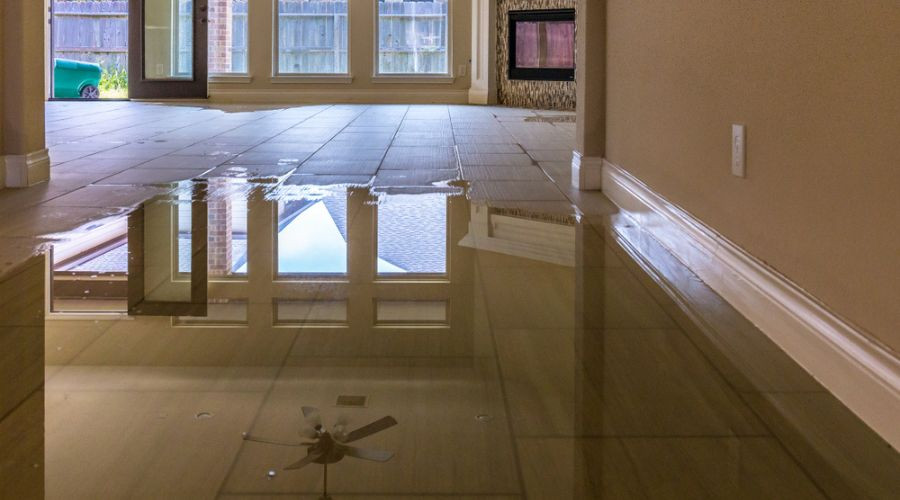
Firefighting operations typically deposit hundreds or thousands of gallons of water into a structure. This water saturates drywall, subfloor, insulation, and wood framing — often in areas far removed from the fire itself, because water follows gravity and wicks through building materials.
Water extraction and structural drying must begin within the first 24 to 48 hours to prevent secondary mold damage. We deploy industrial water extractors, high-capacity dehumidifiers, and directed air movers throughout the affected areas, and we monitor moisture levels in structural materials daily using calibrated moisture meters. Drying is not complete until all structural materials have returned to acceptable moisture content — not just when the surfaces feel dry to the touch.
Phase 4: Smoke and Soot Removal
This is the most labor-intensive phase of fire restoration and the one that most distinguishes professional work from DIY attempts. Soot is not simply dirt — it is a complex mixture of carbon particles, chemical byproducts of combustion, and acidic compounds that behave differently depending on the type of fire and the materials that burned.
Wet smoke residue (from slow-burning, low-heat fires) is sticky and smears easily, requiring different cleaning techniques than dry smoke residue (from fast, high-heat fires). Protein residue from kitchen fires is nearly invisible but produces an extremely pungent odor and requires enzymatic cleaning agents. Our technicians are trained to identify smoke residue types and apply the correct cleaning method to each surface.
Soot removal covers every surface in the affected area — walls, ceilings, floors, trim, fixtures, and contents. HVAC systems require special attention because they can distribute smoke odor throughout the entire home if not properly cleaned and treated.
Phase 5: Deodorization
Smoke odor is one of the most persistent consequences of a fire. The odor molecules penetrate deeply into porous materials and can off-gas for months if not properly treated. Surface cleaning alone is insufficient — effective deodorization requires techniques that reach odor molecules wherever they have penetrated.
Texas Restoration Group uses a combination of thermal fogging, hydroxyl generation, and ozone treatment to neutralize smoke odors at the molecular level. Thermal fogging works by vaporizing a deodorizing agent that penetrates the same pathways smoke traveled through. Ozone treatment oxidizes odor molecules in the air and on surfaces. These treatments are applied after cleaning and before reconstruction, so odors are not sealed inside new materials.
Phase 6: Content Restoration and Pack-Out
Personal belongings — furniture, clothing, documents, electronics, artwork — are often restorable even when they appear badly damaged. Texas Restoration Group offers content pack-out services, where salvageable items are carefully inventoried, transported to our facility, cleaned using appropriate methods (ultrasonic cleaning for hard items, ozone treatment for soft goods), and stored until the home is ready for their return.
Proper content documentation is also critical for insurance purposes. We photograph and inventory every item, noting its condition and estimated replacement value, which supports your insurance claim and helps ensure you receive fair compensation for items that cannot be restored.
Phase 7: Reconstruction
The final phase is rebuilding what was lost. Depending on the severity of the fire, this can range from replacing a section of drywall and repainting a room to full reconstruction of multiple rooms or an entire floor. Texas Restoration Group handles both the mitigation and the reconstruction, which means a single point of contact for the entire project and no gap between the restoration and rebuild phases.
Our reconstruction team works from detailed scope documents that have been reviewed and approved by your insurance company, so there are no surprises in the final billing.
Realistic Timeline Expectations
Every fire is different, and timelines vary significantly based on the size of the fire, the materials involved, and the extent of smoke and water damage. The following represents a general framework rather than a guarantee.
Emergency response, board-up, and initial assessment typically occur within the first 24 hours. Water extraction and the beginning of structural drying begin immediately and continue for three to seven days depending on the extent of water damage. Smoke and soot cleaning, deodorization, and content pack-out typically require one to three weeks. Reconstruction timelines depend entirely on the scope of damage — minor repairs may be completed in a few days, while major structural reconstruction can take two to four months.
Working With Your Insurance Company
Texas Restoration Group works directly with all major insurance carriers and has extensive experience navigating the fire damage claims process. We provide detailed damage documentation, itemized estimates in the format insurance adjusters require, and direct communication with your adjuster throughout the project. Our goal is to ensure that the full scope of damage is documented and that your claim reflects the true cost of restoring your home to its pre-loss condition.
If you have experienced a fire at your home or business in Central Texas, call (512) 883-7364 immediately. We are available around the clock and will be on-site to begin the assessment and protection process as quickly as possible.
Need Professional Restoration Help?
Texas Restoration Group is available 24/7 for emergency restoration services in Central Texas.