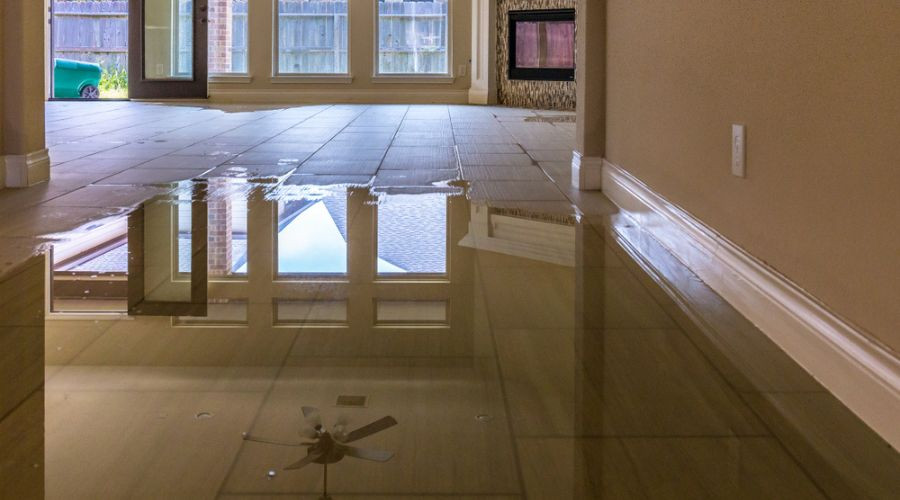
Water damage is one of the most common and costly disasters homeowners face. According to the Insurance Information Institute, water damage and freezing account for nearly 24% of all homeowner insurance claims — and the average claim exceeds $11,000. Whether caused by a burst pipe, a roof leak after a Central Texas hailstorm, a malfunctioning appliance, or storm-driven flooding, the actions you take in the first 24 to 48 hours are the single most important factor in determining how much damage your home sustains and how quickly you recover.
This guide walks you through exactly what to do — and what to avoid — the moment you discover water damage in your home.
Step 1: Prioritize Safety Before Anything Else
Water and electricity are a lethal combination. Before you step into any water-damaged area, turn off the electrical breakers that serve the affected rooms. If your breaker panel is in a flooded area and you cannot safely reach it, call your utility provider to cut power from the street. Never enter standing water without first confirming the electricity is off.
Also assess the structural integrity of the space. Water-saturated ceilings can collapse without warning — if you see bulging or sagging drywall overhead, stay out of that room and call a professional immediately. Watch for slip hazards on wet floors, and if the water has a sewage odor or dark discoloration, treat it as a Category 3 (blackwater) event and do not touch it without protective gear. Blackwater contains bacteria and pathogens that pose serious health risks.
Step 2: Stop the Source
If the water is coming from a plumbing failure — a burst pipe, a broken supply line behind a washing machine, or a failed water heater — locate your main water shutoff valve and turn it off immediately. In most Central Texas homes, the shutoff is near the water meter at the front of the property or in a utility closet. Every adult in your household should know where this valve is before an emergency occurs.
For roof leaks or storm-driven water entry, you cannot stop the source until the weather passes. In those situations, focus on moving valuables out of the affected area, placing buckets or trash cans to catch dripping water, and laying down towels or plastic sheeting to protect flooring.
Step 3: Document Everything Before You Touch It
Your insurance claim depends on thorough documentation. Before you move a single piece of furniture or start mopping, take a complete photographic and video record of the damage. Walk through every affected room and capture:
- Wide-angle shots showing the full scope of each room
- Close-up photos of all damaged materials — flooring, drywall, baseboards, cabinets, furniture
- Water level marks on walls (use a marker to trace the line if the water is receding)
- Any visible source of the water (the burst pipe, the roof penetration, the overflowing appliance)
- Serial numbers and model numbers of damaged appliances and electronics
Do not throw anything away before your insurance adjuster has seen it. Even saturated carpet, warped flooring, and ruined furniture are evidence that supports your claim. Store damaged items in a garage or outside if possible, but keep them accessible.
Step 4: Call Your Insurance Company
Contact your insurance provider as soon as you have documented the damage — ideally within the first few hours. Most homeowner policies require prompt notification, and delays can complicate or reduce your claim. When you call, have the following information ready:
- The date and time you discovered the damage
- The apparent cause (burst pipe, storm, appliance failure, etc.)
- A description of the affected areas and materials
- Your photo and video documentation ready to upload or share
Ask your adjuster specifically about your coverage for water mitigation and drying services, temporary housing if the home is uninhabitable, and contents replacement. Also ask whether your policy covers mold remediation — because if your home is not dried properly within 48 to 72 hours, mold growth is almost certain, and mold remediation is a separate and significant expense.
Step 5: Call a Professional Water Mitigation Company
This is the most important call you will make. A professional water mitigation company does not simply remove standing water — they use industrial-grade equipment to extract moisture from walls, subfloors, and structural cavities that are invisible to the naked eye. Consumer-grade fans and dehumidifiers are not sufficient to dry a water-damaged structure to the moisture levels required to prevent mold.
At Texas Restoration Group, our IICRC-certified technicians use thermal imaging cameras to locate hidden moisture pockets, commercial air movers and desiccant dehumidifiers to accelerate drying, and calibrated moisture meters to verify that every surface has reached its target dryness before we close up walls. We document every reading with moisture logs that become part of your insurance file.
We are available 24 hours a day, 7 days a week, and can be on-site within 59 minutes anywhere in the Austin metro area. The sooner we arrive, the more of your home we can save.
Step 6: Remove Standing Water and Begin Ventilation
While you wait for professionals to arrive, there are safe steps you can take to begin limiting damage. If standing water is present and you have confirmed the electricity is off, use mops, towels, or a wet/dry shop vacuum to remove as much water as possible from hard-surface floors. Do not use a regular household vacuum — it is not designed for water and creates an electrocution risk.
Open windows and interior doors to increase air circulation. If the outdoor humidity is lower than the indoor humidity (common in Central Texas during dry months), running fans to push air out of the home can help. However, if outdoor humidity is high — as it often is after a storm — opening windows may introduce more moisture than it removes. In that case, keep windows closed and wait for professional dehumidification equipment.
Move furniture, rugs, and personal belongings out of wet areas. Lift upholstered furniture onto blocks or aluminum foil to prevent dye transfer and rust stains on wet flooring. Roll up and remove wet rugs — they trap moisture against flooring and dramatically accelerate mold growth.
Step 7: Watch for Mold — It Starts Faster Than You Think
Mold can begin colonizing wet materials within 24 to 48 hours under the right conditions. Central Texas summers — with high ambient temperatures and humidity — are ideal for rapid mold growth. Even after visible water is removed, moisture trapped in drywall, insulation, subfloor, and wall cavities will sustain mold growth for weeks if not properly dried.
Signs that mold has already begun include a musty or earthy odor, visible dark spotting on walls or ceilings, and allergic symptoms (sneezing, eye irritation, coughing) that worsen when you are inside the home. If you notice any of these signs, do not attempt to clean the mold yourself with bleach — bleach does not penetrate porous materials and will not kill mold growing inside drywall or wood. Call a professional remediation company.
What NOT to Do After Water Damage
Several common instincts can actually make water damage significantly worse. Avoid these mistakes:
Do not use a regular household vacuum on standing water. Wet/dry shop vacuums are designed for this purpose; standard vacuums are not and can be destroyed or cause electrocution.
Do not run your HVAC system. If mold spores are present, your HVAC system will distribute them throughout every room in the house. Turn the system off until a professional has assessed the situation.
Do not enter rooms with sagging ceilings. A water-saturated drywall ceiling can hold hundreds of pounds of water. If it collapses while you are beneath it, the result can be fatal.
Do not discard damaged items before your adjuster visits. Even items that appear unsalvageable are evidence for your insurance claim.
Do not wait to call for help. Every hour that passes without professional drying equipment running increases the likelihood of mold growth and structural damage. The cost of mitigation is almost always far less than the cost of the damage that results from delay.
The Professional Drying Process: What to Expect
When a Texas Restoration Group team arrives at your property, here is what the professional mitigation process looks like:
First, we conduct a full moisture assessment using thermal imaging and calibrated moisture meters to map every affected area — including hidden moisture inside walls and under flooring that is not visible to the eye. This assessment determines the scope of work and establishes baseline moisture readings for your insurance documentation.
Next, we extract all standing water using truck-mounted extraction units capable of removing thousands of gallons per hour. We then place a calculated number of commercial air movers and dehumidifiers based on the square footage, materials, and moisture levels of the affected space. Industrial equipment dries structures three to five times faster than consumer-grade fans.
Throughout the drying process — typically three to five days — we return daily to take moisture readings and adjust equipment placement. We document every reading and provide you with a complete drying log. When all materials have reached their target moisture content, we remove the equipment and provide a final clearance report that becomes part of your insurance file.
Central Texas Water Damage: Local Factors to Know
Central Texas presents specific water damage risks that homeowners should be aware of. The region's clay-heavy soil expands significantly when wet and contracts during dry periods, which creates ongoing stress on foundation slabs and can cause plumbing lines to shift and crack over time. Homes in the Austin metro area — particularly those built before 2000 — are especially susceptible to slab leaks, which can go undetected for months while slowly saturating the subfloor.
The area's severe weather patterns also create unique risks. Central Texas sits in what meteorologists call "Flash Flood Alley" — a corridor stretching from Del Rio to Austin where intense rainfall events regularly produce flash flooding with little warning. Hailstorms, which are common from March through June, can puncture roofing materials and create water intrusion pathways that may not be immediately apparent but cause significant interior damage over subsequent weeks.
If you have experienced any of these events — a slab leak, flash flooding, or hail damage — and are unsure whether your home has sustained water damage, a professional moisture assessment is the most reliable way to find out.
Call Texas Restoration Group: Available 24/7
Texas Restoration Group serves homeowners and businesses throughout Central Texas, including Austin, Round Rock, Cedar Park, Pflugerville, Georgetown, Kyle, Buda, and surrounding communities. Our IICRC-certified technicians are available around the clock for emergency water mitigation, and we work directly with all major insurance carriers to streamline the claims process for our customers.
If you are dealing with water damage right now, call (512) 883-7364. We will be on-site within 59 minutes.
Need Professional Restoration Help?
Texas Restoration Group is available 24/7 for emergency restoration services in Central Texas.
