Our Services
Comprehensive Restoration Services
From water and fire damage to mold and storm restoration — certified, professional, and available 24/7.

What's Included
- 24/7 Emergency Response
- IICRC Certified Technicians
- We Advocate for Your Full Claim
- Daily Progress Monitoring
- Injectidry for Hardwood Floors
Fast Response. Complete Drying. Full Restoration.
Water damage can escalate within hours — mold begins growing in as little as 24–48 hours. Our certified technicians respond quickly to extract standing water, dry affected structures, and restore your property to pre-loss condition.
Water Damage Categories
Category 1 — Clean Water
Broken pipes, supply line failures, appliance malfunctions. Lowest health risk.
Category 2 — Grey Water
Dishwasher overflow, washing machine discharge, toilet overflow (no feces). Moderate contamination.
Category 3 — Black Water
Sewage backups, flooding from rivers or streams. Highly contaminated — full PPE required.
Our Water Mitigation Process
Damage Assessment
We determine the water category (clean, grey, or black water), classify the damage, and identify all affected areas using moisture meters and infrared cameras.
Water Extraction & Stabilization
Using truck-mount and portable extractors, we remove standing water immediately. We then stabilize the affected area — protecting belongings, containing the damage, and preventing it from spreading further.
Pre-Demolition Hazmat Testing
Before any materials are removed, we assess for hazardous materials. Per OSHA guidelines, we treat all homes as potentially containing asbestos, and homes built before 1970 may contain lead. If testing is required to protect our crew and your family, we coordinate it before demolition proceeds.
Demolition & Cleanup
Once clearance is confirmed, non-salvageable materials (drywall, flooring, insulation) are carefully removed. Air scrubbers run continuously during demo to maintain air quality.
Drying Equipment Setup
Industrial dehumidifiers, air movers, and heat systems are strategically placed following IICRC standards to achieve optimal drying conditions.
Daily Monitoring & Restoration
Our team returns daily to take atmospheric and moisture readings until drying goals are met — typically 3–5 days. Once dry, we restore damaged materials to pre-loss condition.

What's Included
- 24/7 Emergency Board-Up
- Smoke & Soot Removal
- Content Stabilization
- Odor Elimination
- We Fight for Your Full Claim
Smoke. Soot. Structural Damage. We Handle It All.
Fire damage goes far beyond what flames touch. Smoke and soot penetrate walls, HVAC systems, and personal belongings throughout your home. Our 8-step restoration process addresses every aspect of fire damage from emergency board-up to complete structural restoration.
Our Fire Restoration Process
Damage Assessment
We evaluate fire, smoke, and water damage (from firefighting efforts), identify salvageable vs. non-salvageable materials, and document everything on your behalf.
Work Authorization & Documentation
We prepare thorough documentation — photos, moisture readings, and professional scopes of work — so your claim is fully supported. We work for you.
Property Securing & Board-Up
We immediately secure your property by boarding up windows, doors, and damaged framing to prevent weather intrusion and unauthorized entry.
Emergency Cleaning & Mitigation
Water extraction from firefighting efforts, content stabilization, and corrosion mitigation on metals and electronics begin immediately.
Pre-Demolition Hazmat Testing
Before any demolition begins, we test affected materials for asbestos, lead, and other hazardous substances. Per OSHA guidelines, we treat all homes as potentially containing asbestos, and homes built before 1970 may contain lead. We will never skip this step — it protects our crew and your family.
Selective Demolition
Only after hazmat clearance: charred structural materials, unsalvageable drywall, and fire-damaged framing are safely removed and disposed of in compliance with local regulations. Salvageable items are separated for cleaning and restoration.
Smoke & Soot Removal
HEPA vacuuming removes loose soot. Specialized degreasers break down smoke residue. Antimicrobial serums treat affected surfaces. Air scrubbers run continuously.
Drying Equipment Setup
Industrial drying equipment addresses water damage from firefighting efforts, preventing secondary mold growth.
Monitoring & Completion
Daily readings confirm drying goals are met. Final quality inspection before project closeout.
What's Included
- Independent Pre-Work Assessment
- Containment & Negative Air
- HEPA Vacuuming
- Antimicrobial Treatment
- Post-Clearance Consultant Verification
Safe. Thorough. Verified by Independent Testing.
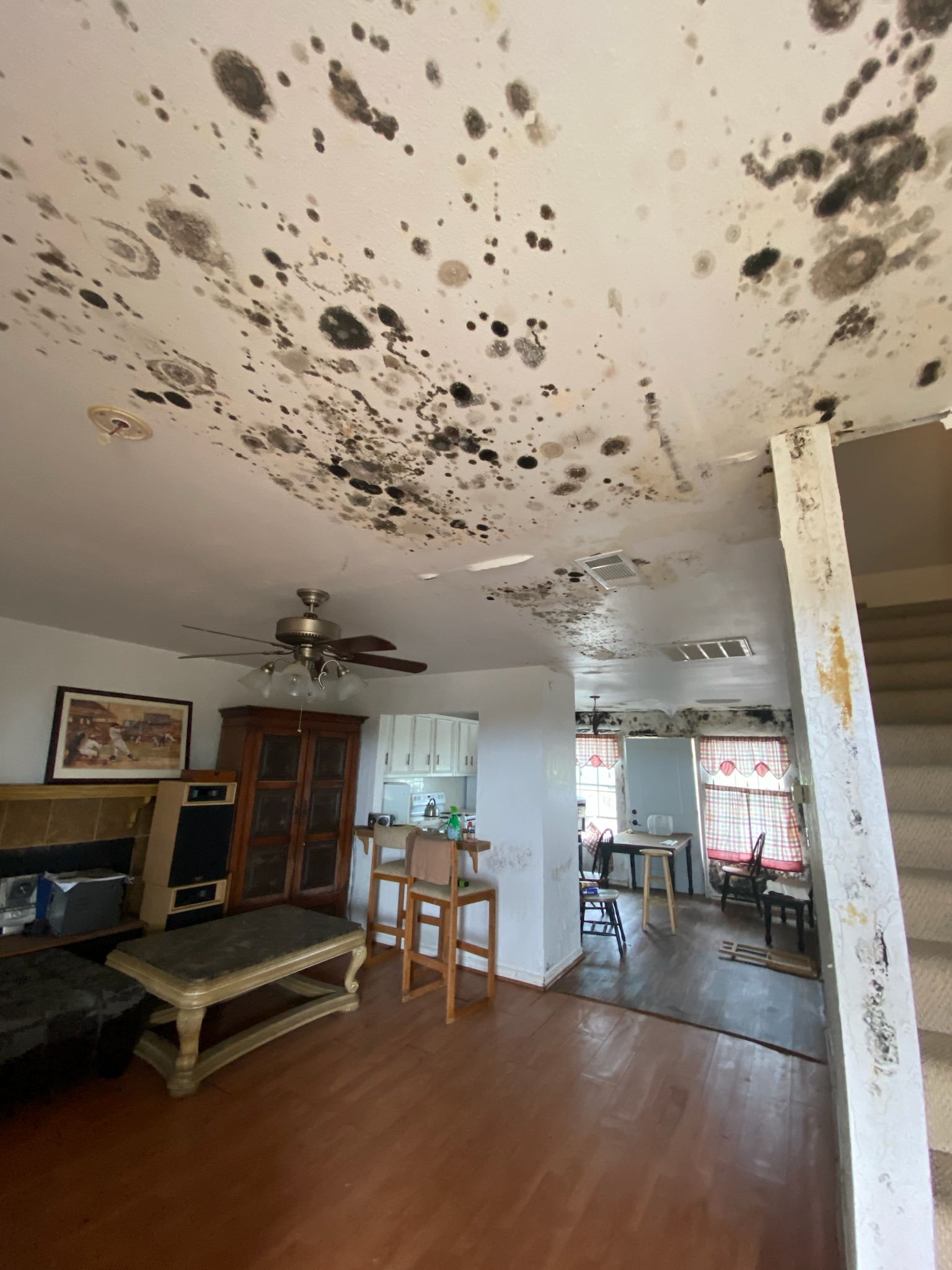
Mold is more than an eyesore — it poses serious health risks and can structurally compromise your property. Our process is built around independent oversight: certified Mold Consultants assess the situation before we begin to confirm remediation is warranted, and return after completion to verify through air quality and surface testing that all contaminants of concern have been removed and are no longer a hazard to interior air quality or the structure of the home.
Our Mold Remediation Process
Pre-Work Consultant Assessment
An independent, certified Mold Consultant inspects the property and collects air and surface samples before any work begins. This confirms that remediation is truly needed, defines the scope, and protects you from unnecessary work.
Containment & Negative Air
We establish physical containment barriers and set up negative air pressure to prevent mold spores from spreading to clean areas of the home during remediation.
Pre-Demolition Hazmat Testing
Before any materials are removed, we test for asbestos, lead, and other hazardous substances. Per OSHA guidelines, we treat all homes as potentially containing asbestos, and homes built before 1970 may contain lead. Clearance is required before demolition proceeds — we will never skip this step.
Demolition
Only after hazmat clearance: mold-contaminated drywall, flooring, and insulation are carefully removed and double-bagged for disposal. Quality checks are performed after demolition and before treatment.
Remediation Treatment
HEPA vacuuming removes residual mold spores. EPA-registered antimicrobial products are applied to all affected surfaces. A second HEPA vacuum pass follows, and air scrubbers run for 24 hours.
Post-Clearance Consultant Testing
The independent Mold Consultant returns to conduct post-clearance air quality and surface testing. Only when results confirm that all contaminants have been removed, interior air quality is safe, and the structure is no longer at risk is the project officially cleared — and rebuild may begin.
Structural Restoration
Only after clearance is confirmed: damaged materials are replaced and the affected area is restored to pre-loss condition, leaving your home structurally sound and visually complete.
What's Included
- 24/7 Storm Response
- Emergency Tarping & Board-Up
- Hail & Wind Damage
- Flood & Water Intrusion
- We Advocate for Your Full Claim
Ready When Severe Weather Strikes.
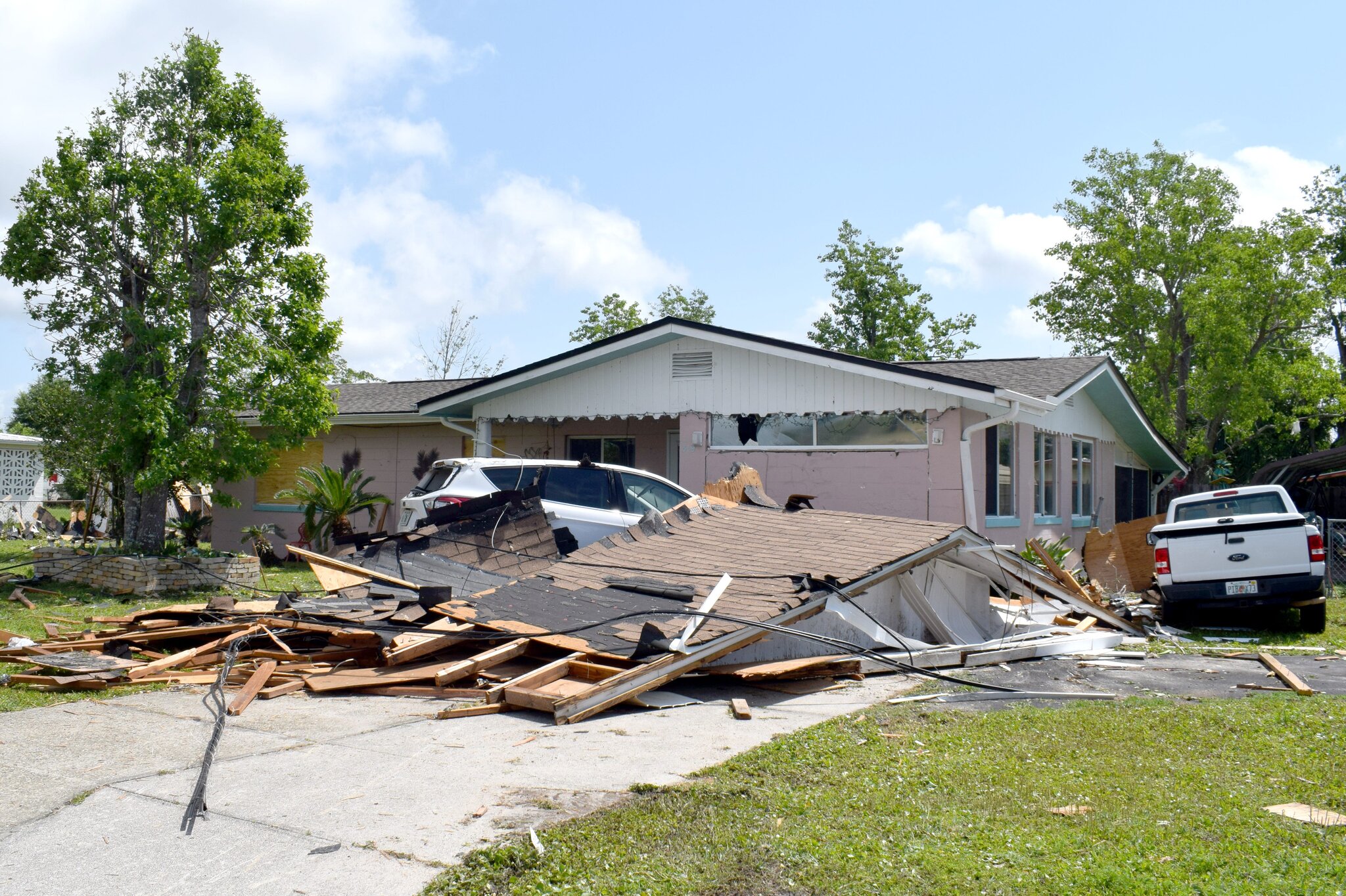
Central Texas is no stranger to severe weather — from hailstorms and high winds to flash flooding and tornadoes. When a storm damages your home or business, our team responds quickly to secure your property, mitigate further damage, and begin the restoration process.
Our Storm Damage Restoration Process
Emergency Response
We respond 24/7 to storm emergencies. Our first priority is securing your property to prevent additional damage from weather exposure.
Damage Assessment
We document all storm-related damage — roof, windows, siding, structural elements, and interior water intrusion — for your insurance claim.
Property Securing & Tarping
Roof tarping, window boarding, and temporary structural supports are installed immediately to prevent further weather intrusion.
Water Extraction & Drying
Any water intrusion from the storm is extracted and dried using our full suite of industrial drying equipment.
Pre-Demolition Hazmat Testing
Before any damaged materials are removed, we test for asbestos, lead, and other hazardous substances. Per OSHA guidelines, we treat all homes as potentially containing asbestos, and homes built before 1970 may contain lead. Clearance is required before demolition proceeds — we will never skip this step.
Debris Removal & Cleanup
Only after hazmat clearance: storm debris, damaged materials, and non-salvageable items are safely removed and properly disposed of in compliance with local regulations.
Restoration & Repair
Structural repairs, drywall replacement, flooring restoration, and full property restoration are completed to pre-storm condition.

What's Included
- Tobacco & Cigarette Smoke
- Post-Fire Smoke Odor
- Mold & Mildew Odor
- Pet & General Odors
- HEPA Air Scrubbing
- Thermal Fogging
Eliminate Smoke, Tobacco & Fire Odors at the Source.
Smoke, tobacco, and fire odors embed into walls, HVAC ductwork, carpet fibers, and insulation at a molecular level. Repainting and conventional cleaning cannot reach them. Our 12-step protocol uses thermal fogging, HEPA air scrubbing with activated carbon, and hot-water extraction to eliminate odors permanently.
Our Odor Remediation Process
HVAC Ductwork & Coil Cleaning
Ductwork is treated with a ULV fogger using Medi-Clean Fragrance-Free. HVAC coils are cleaned by a certified technician to prevent re-contamination through the air supply.
Structure Sealed & Thermal Fogging
All windows and exterior doors are closed. Thermo-55 Tabac-Attack is applied using an Electro-Gen Thermo-fogger throughout the entire structure, penetrating the same porous surfaces smoke does.
HEPA Air Scrubbing
HEPA air scrubbers with activated carbon filters run continuously throughout the home, achieving a minimum of 6 air changes per hour, capturing airborne particles and volatile organic compounds.
Surface Treatment
All painted walls, ceilings, and cabinets are foamed with UnSmoke Wall-Wash and Tabac-Attack. Tile and grout are treated and cleaned at 900 PSI.
Hot-Water Extraction & Acid Rinse
Carpets and upholstery are hot-water extracted using DegreaseAll with TabacAttack. A Pro-Chem acid rinse neutralizes alkaline residues and restores fiber pH balance.
Final Air Quality Verification
Equipment is removed and a final walkthrough confirms odor elimination before we leave the property.
What's Included
- 24/7 Emergency Response
- Full PPE & Containment
- EPA-Registered Disinfection
- Compliant Waste Disposal
- Insurance Documentation
Safe. Discreet. Fully Compliant Remediation.
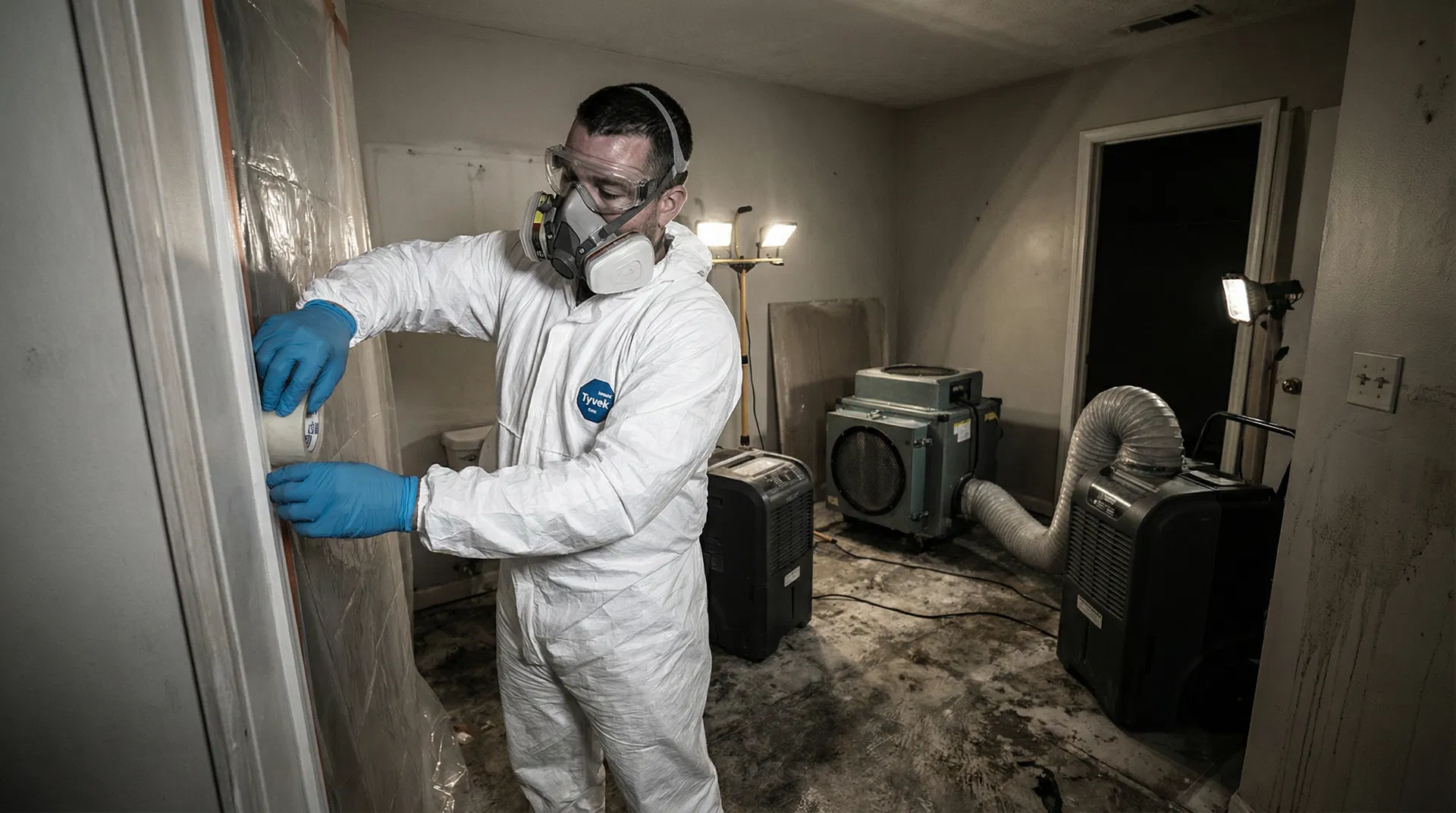
Sewage backups and biohazardous contamination require immediate, professional response. Category 3 black water contains bacteria, viruses, and pathogens that pose serious health risks. Our IICRC-certified technicians respond 24/7 with full PPE, proper containment, EPA-registered disinfection, and compliant disposal — protecting your family and your property.
Water Damage Categories
Sewage Backups
Sewer line backups and toilet overflows introduce Category 3 (black water) contamination. All porous materials in contact must be removed.
Contaminated Flooding
Floodwater from rivers, streams, or storm drains carries bacteria, pathogens, and chemical contaminants requiring full decontamination.
Hazardous Material Spills
Chemical spills and industrial waste require specialized handling, PPE, and disposal per OSHA and EPA regulations.
Our Biohazard & Sewage Cleanup Process
Emergency Response & Site Assessment
We respond 24/7. Upon arrival, our certified technicians assess the scope of contamination, identify the source, and establish a safety perimeter. All personnel don full PPE before entering the affected area.
Containment Setup
Affected areas are physically isolated with containment barriers and negative air pressure to prevent cross-contamination to clean areas of the property.
Removal of Contaminated Materials
All porous materials in contact with Category 3 water or biohazardous substances — drywall, flooring, insulation, soft goods — are safely removed and disposed of in compliance with local and federal regulations.
Decontamination & Disinfection
Structural surfaces are thoroughly cleaned with EPA-registered hospital-grade disinfectants. HEPA air scrubbers run continuously to capture airborne pathogens and particulates.
Odor Treatment
Sewage and biohazard situations leave persistent odors embedded in structural materials. We apply thermal fogging and antimicrobial treatments to neutralize odors at the molecular level.
Clearance & Restoration
After remediation, we verify contamination levels are within safe limits. Once cleared, we restore damaged structural materials to pre-loss condition, coordinating with your insurance adjuster throughout.
Ready to Get Started?
Our team is available 24/7 for emergencies. Call us now or schedule a free assessment online.